
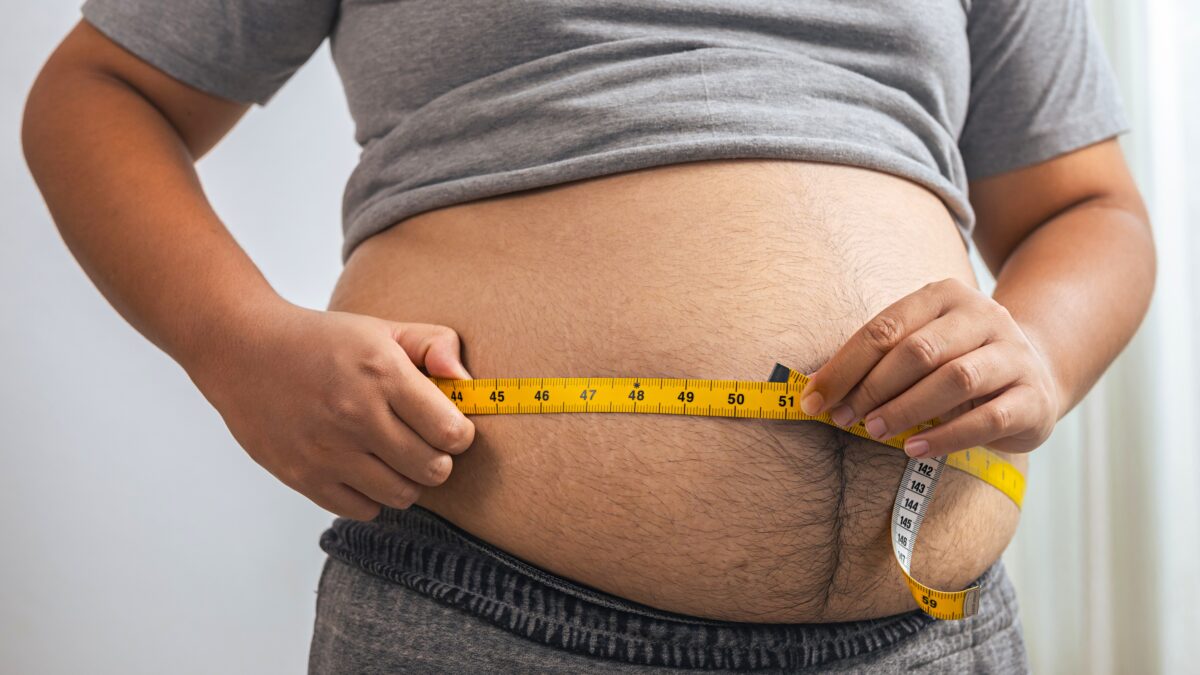
Presented in early December in Chicago, during the Radiological Society of North America (RSNA) congress, this study demonstrates that abdominal obesity profoundly modifies the structure of the heart.
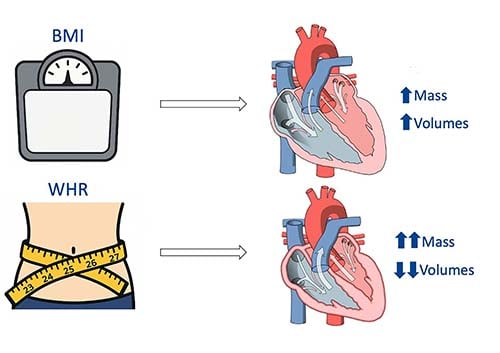
More concretely, it would increase the cardiac muscle mass while reducing the volume of the internal cavities. The result: the heart pumps less blood and a silent but potentially serious change.
How Abdominal Fat Disrupts Your Heart
For this work, the scientists worked using images obtained by cardiac MRI (like the one recently revealed by Donald Trump). Jennifer Erley and her team from the University Medical Center Hamburg-Eppendorf (Germany) analyzed data from 2,244 adults aged 46 to 78, with no history of cardiovascular disease.
The results highlighted the importance of a key factor (which is not weight or BMI): the waist/hip ratio, more representative of “central” obesity. Among the participants, those with such a high ratio presented:
- Thickening of the heart muscle (concentric hypertrophy);
- Internal chambers of the heart – ventricles – narrower than normal;
- A lower volume of blood ejected with each beat.
The heart keeps the same external envelope, but the interior tightens: a bit like a balloon whose wall thickens while shrinking the interior space. This remodeling reduces the heart’s ability to fill and relax properly, hampering its optimal role as a pump for the entire organism.
 © rnsa
The effects are particularly marked in men, even after taking into account other known risk factors such as hypertension, diabetes, cholesterol or tobacco.
Why is abdominal fat more harmful than classic excess weight?
The difference is the metabolic nature of visceral fat, compared to subcutaneous fat, just under the skin.
“Visceral fat is very metabolically active: it releases pro-inflammatory cytokines, free fatty acids and adipokines. explains Dr Gérald Kierzek, consulted on this study. “These compounds disrupt metabolism, promote insulin resistance, inflammation and plaque formation in the arteries (atherosclerosis).”
“In the long term, this chronic inflammation and metabolic disturbance increases bad cholesterol (LDL), triglycerides, while reducing good cholesterol (HDL)” he adds.
Result: an increased risk of hypertension, arterial diseases, heart attack, stroke, but also harmful cardiac remodeling are to be feared. “These effects are much more pronounced when fat accumulates around the waist rather than distributed throughout the body“insists our expert.
How to fight this abdominal fat?
For all those who want to reduce the risks linked to a beer belly – which affects men more but can also concern women, remember – here are some concrete keys, revealed by Dr Kierzek:
- Measure your waist and hips.
If the waist-to-hip ratio exceeds 0.90 in men or 0.85 in women (World Health Organization – WHO threshold), this signals excess abdominal fat; - Eat a diet rich in protein
(≈ 1.5 g/kg of weight), in fiber, fruits and vegetables, good fats (omega-3, olive oil), while limiting sugars, ultra-processed foods and alcohol; - Move regularly : HIIT training 1 to 2 times per week, moderate cardio (running, cycling) 30 min/day, and weight training to stimulate metabolism and insulin sensitivity;
- Take care of your lifestyle : 7 to 9 hours of sleep per night, stress management through meditation or yoga, exposure to the cold (cold showers) and an unprocessed diet for a balanced intestinal microbiota;
- Monitor your waistline regularly. In men, a waist circumference greater than 102 cm, in women more than 88 cm, should alert you.
By adopting these good reflexes, you limit the accumulation of visceral fat and benefit from real long-term protection.