
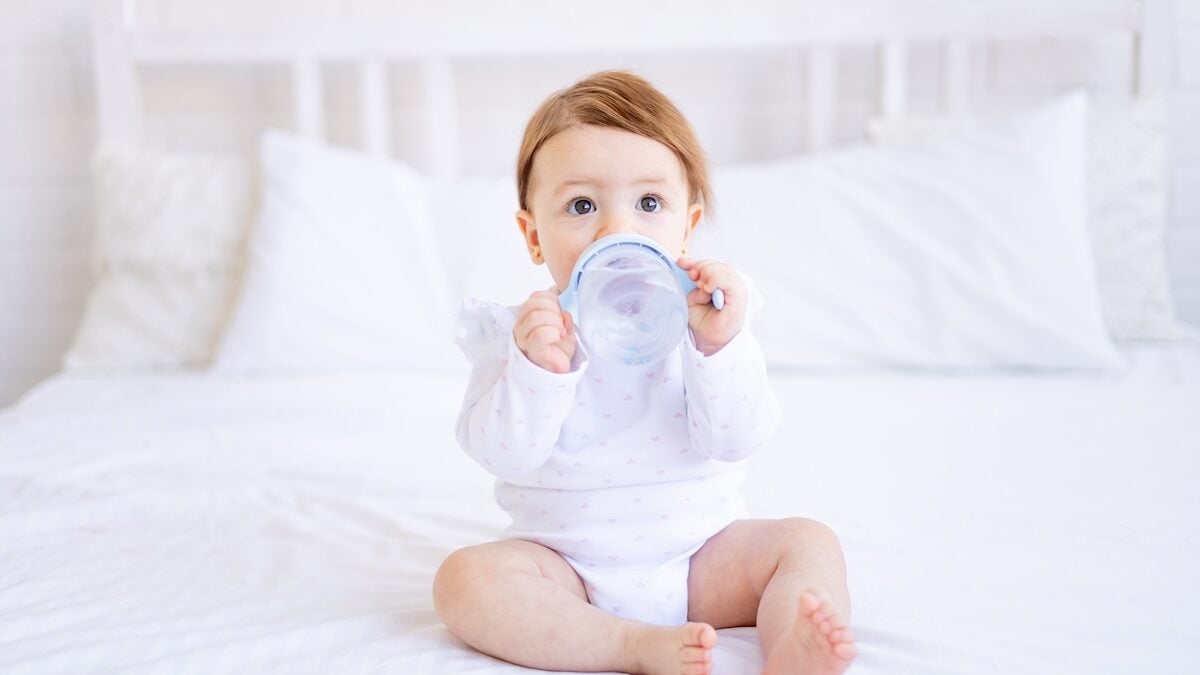
During the hot weather, this gesture may seem trivial can actually be dangerous: giving water to a baby under 6 months old. Jamy Gourmaud, scientific figure of the program It’s not rocket scienceexplained on Instagram why it is strongly advised not to offer pure water to infants. The expert wanted to recall the medical reasons which justify this instruction.
Useless and dangerous water before 6 months
According to Jamy Gourmaud, “breast or infantile milk is a source of sufficient hydration“. Whether breastfeeding or infantile milk, the water content is largely adapted to the needs of infants.
But the expert highlights another essential point: “Drinking water can even be dangerous for a baby of less than six months, as it can fill your stomach, reduce its appetite and compromise the absorption of essential nutrients present in milk“.
At this age, milk remains the only source of nutritional and hydration, making water superfluous, even risky.
The kidneys of infants, still immature
An anatomical explanation strengthens this prohibition: “Infants’ kidneys are not able to effectively filter excess water“, Recalls Jamy. This lack of maturity exposes babies to a risk of water poisoning.
This hyperhydration is manifested by disturbing symptoms such as cramps, spasms, muscle fatigue, nausea or vomiting. In serious cases, a loss of consciousness can occur and bring into play the life of the infant.
Medical exceptions and after diversification
Some special cases may lead a doctor to recommend small amounts of water: hot weather exceeding 30 ° C, episodes of diarrhea or vomiting, or fever. In these situations, the water supply remains limited, often to the spoon, and sometimes in the form of rehydration solutes.
Once the food diversification has been started, the needs are changing. Solid meals contain less water than milk. A bottle of 200 to 250 ml per day can then supplement hydration, provided you use weakly mineralized water or tap water, if suitable.