
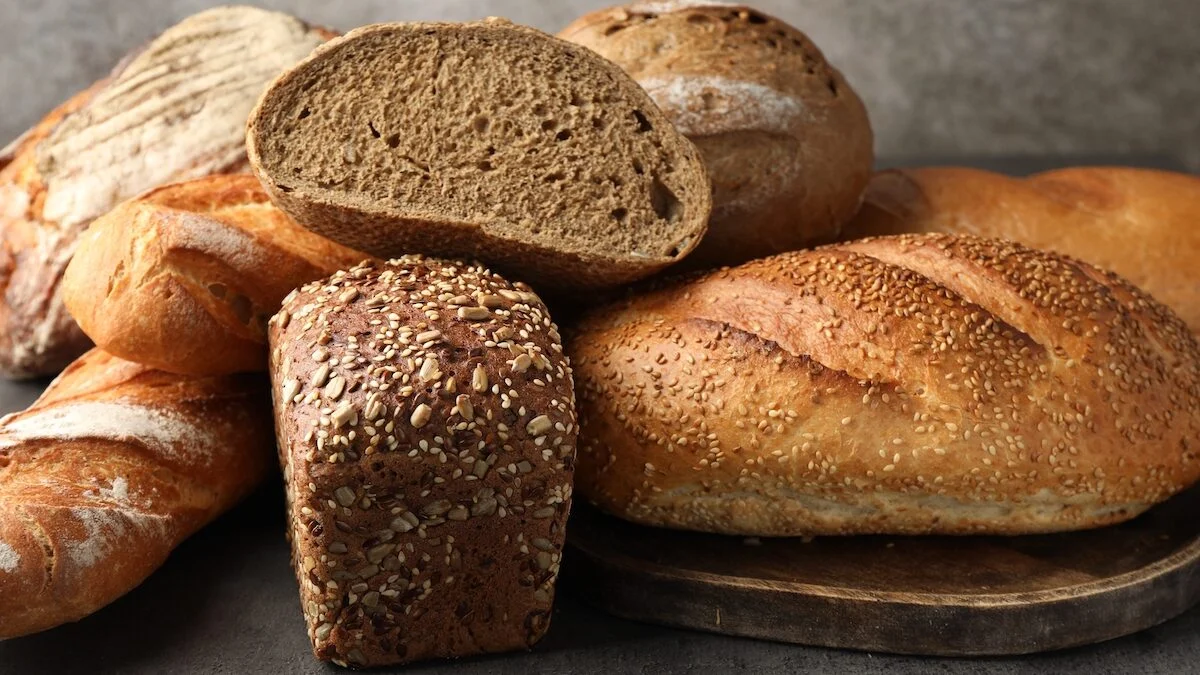
Fermentation and leavening: why bread crumbs have holes
It all starts during fermentation. The yeasts present in sourdough feed on sugars resulting from the transformation of starch. They then produce carbon dioxide (CO₂), which accumulates in the dough and gradually forms bubbles.
During the first rest, called pointing, then during the second shoot, called priming, these bubbles continue to grow. The gas remains trapped in the dough and increases its volume. The cells that we discover after cooking therefore correspond to these pockets of gas.
The recipes on the 750g site recommend a temperature of around 25 to 30°C to encourage growth, until the dough has risen sufficiently. But fermentation isn’t everything.
Gluten, kneading and shaping: how a honeycomb crumb is formed
For the bubbles to remain in the dough, it must be able to retain them. This is where gluten comes in. During kneading, certain flour proteins organize themselves to form an elastic network. This acts as a sort of net around the gas bubbles.
Kneading and shaping must therefore be sufficiently controlled. Insufficiently kneaded dough can lack structure, while too intense work or too rough shaping can cause some of the accumulated gas to be lost.
Shaping also allows the bubbles to be distributed throughout the dough. Too much degassing can result in a very tight crumb, while excessive fermentation can encourage the formation of very large cells.
Some fans of homemade bread even see it as a sign of success. An Internet user wrote to Jamy Gourmaud: “Thank you for this video. I make my own bread and it is full of holes, a sign of success.”
Baking bread: why holes remain in the crumb
Once the bread is placed in the oven, the dough continues to rise for a few minutes. This is the famous “coup de four”. The heat causes a final expansion of the gases and water vapor before the structure of the crumb gradually becomes fixed.
The yeast then ceases its activity with increasing temperature. The starch and proteins in turn transform under the effect of heat, which allows the crumb to retain its structure.
The amount of water also plays a role in this transformation. A study by the National Research Institute for Agriculture, Food and the Environment (INRAE), published in 2024, focused in particular on the distribution of water in bread during baking.
Ultimately, the holes in the crumb are the result of several steps that work together: fermentation produces the gas, gluten retains it, shaping distributes the bubbles and cooking finally sets this structure. A well-shaped crumb therefore owes nothing to chance.