
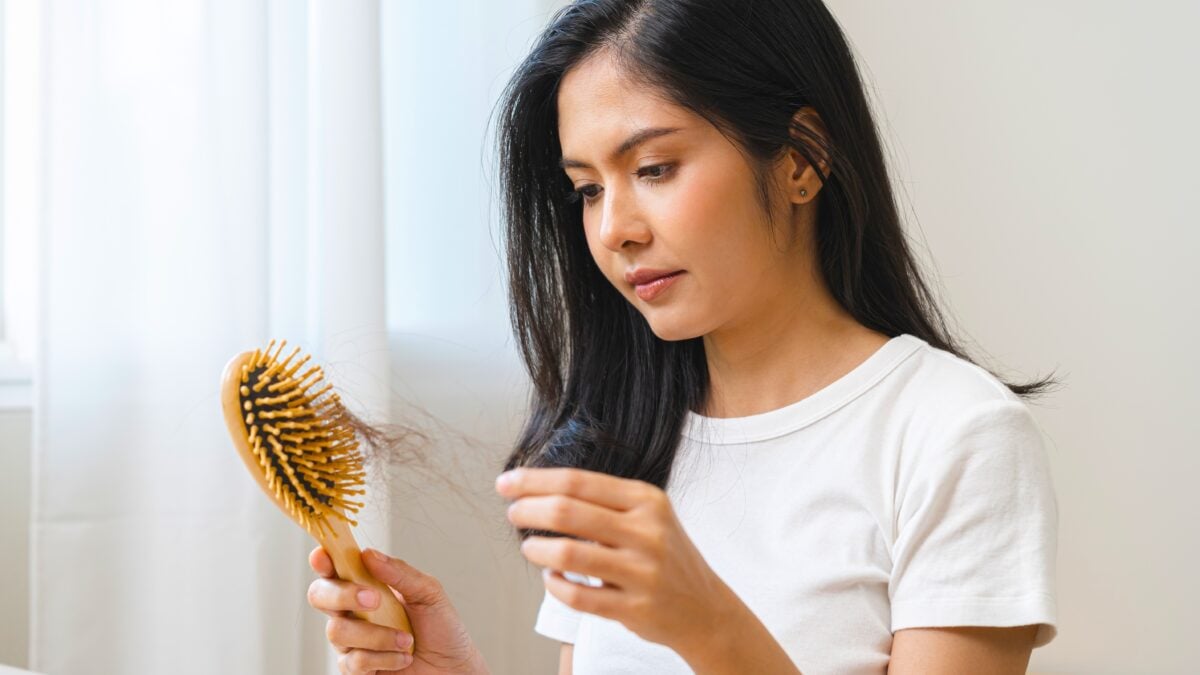
Every day, new hairs grow on our heads, while others fall out: this is the natural hair cycle.
When this phenomenon remains balanced, nothing to worry about. But if the loss outweighs the regrowth, an imbalance sets in… and winter can play an important role. Indeed, the environment – particularly cold, lack of light or dryness – can also weaken the hair.
A normal daily loss of 50 to 100 hairs
Questioned on the subject, Dr. Gérald Kierzek, emergency physician and medical director of True Medical, confirms this phenomenon. “We lose between 50 and 100 hairs per day and this is completely normal.“However, as soon as the loss exceeds 100 hairs per day or if it concerns a specific area, we speak of alopecia.
What is “seasonal” hair loss in winter?
In winter, some people observe a greater drop than usual. Even if the precise causes remain unclear, several mechanisms are strongly suspected.
Vitamin D, beneficial for our bones, also plays a key role in the formation of cells that develop hair follicles. In winter, with less light, levels drop… and can contribute to hair loss.
Practical advice: in addition to moderate exposure to the sun, choose foods rich in vitamin D such as fatty fish (salmon, sardines, mackerel), mushrooms (morels, chanterelles), eggs or dairy products. If necessary, a supplement can be considered with your doctor.
Lack of light in winter can promote seasonal affective disorder (SAD), or winter depression. This emotional stress can precipitate certain forms of hair loss. To limit these effects, Dr. Gérald Kierzek recommends using light therapy, going out into natural light every day, maintaining a regular sleep schedule, without forgetting the practice of physical activity and relaxation techniques such as yoga or meditation.
The cold exterior climate and the dry air of heated interiors reduce ambient humidity, which dries the scalp, but also the hair fiber.
Prevent and take care of your hair in winter
To limit hair loss linked to the season, a few simple but effective actions can make the difference, reminds our expert:
- Eat a diet rich in key nutrients (iron, zinc, vitamins B and D), with foods such as lentils, eggs, nuts;
- Choose gentle hair care: non-aggressive shampoos, moisturizing lotions, food supplements on medical advice;
- Manage stress: meditation, yoga, regular sleep or a daily walk can help your hair stay healthy;
- Physically protect your hair from the cold : a well-fitted hat, protective care, and avoid too frequent heating devices.
“If the loss becomes worrying, consult a dermatologist.
recommends Dr. Kierzek. “Tests such as a blood test (iron, thyroid, vitamin D) or appropriate treatments may be offered. he concludes.