
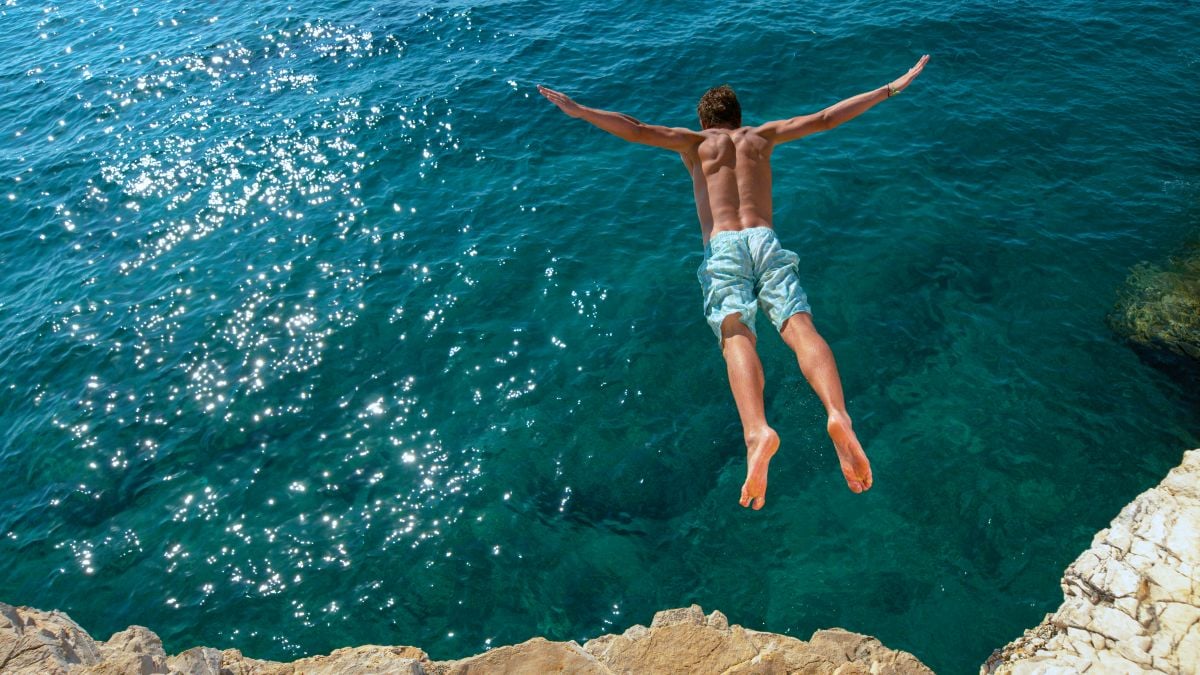
Sunday, August 10, around 3 p.m., a 24 -year -old young man was seriously injured at La Ciotat. By trying a wild dive from the rocks of the Figuerolles cliff, he dropped 7 to 8 meters in the sea, head the first. Originally from Montpellier, he was unconscious when help arrived.
Rescue that intervenes in an emergency
It is our colleagues from France 3 regions that report the mishap of this young man. The firefighters of the Bouches-du-Rhône, supported by the Dragon 131 helicopter of Civil Security and the SMUR teams, took care of it in emergency. The town hall of La Ciotat specifies that it suffers from a cranial trauma and that its vital prognosis is engaged.
Clear but often ignored prohibitions
The dive from the rocks is however prohibited by municipal decree at La Ciotat. Despite this, some continue to defy the rule, at the risk of their lives. In June, near the Catalans beach in Marseille, a man had already been found between life and death after a similar jump.
For Dr Gérald Kierzek, medical director of True Medical, “It is fundamental to integrate the concept of risks, especially among young people, when they indulge in wild dives“. He warns against the “Insufficient depth for a safe dive, with a significant risk of impact“And insists on the need to always assess the area before launching.”In natural environments, beware of rocks or obstacles hidden below the surface; It is a deadly danger for divers “he adds.
Wild diving: what risks?
The dangers linked to this practice are multiple. Hit the bottom or an obstacle “can cause lesions of the spine and potentially a quadriplegia“Explains the doctor.
In addition, a violent impact of the head against an object can cause “serious head trauma (loss of consciousness, brain damage, etc.)“He continues.
Finally, in the event of loss of consciousness, the risk of drowning is important, “Especially if no one can help quickly: fractures, sprains or other injuries, particularly to the upper members and the head “specifies Dr Gérald Kierzek again.
Precautions to take before jumping
To reduce risks, the expert recommends:
- To assess the depth and verify the absence of obstacles “like rocks or debris”;
- To respect the instructions in the swimming pools “and not to dive into shallow areas”;
- To dive in the presence of other people, who could intervene in the event of a problem. “”Children and adolescents are particularly vulnerable“;
- Avoid isolated or unsecured places;
- To wear a helmet in the event of extreme aquatic sport;
- And finally, not to consume alcohol before diving.