
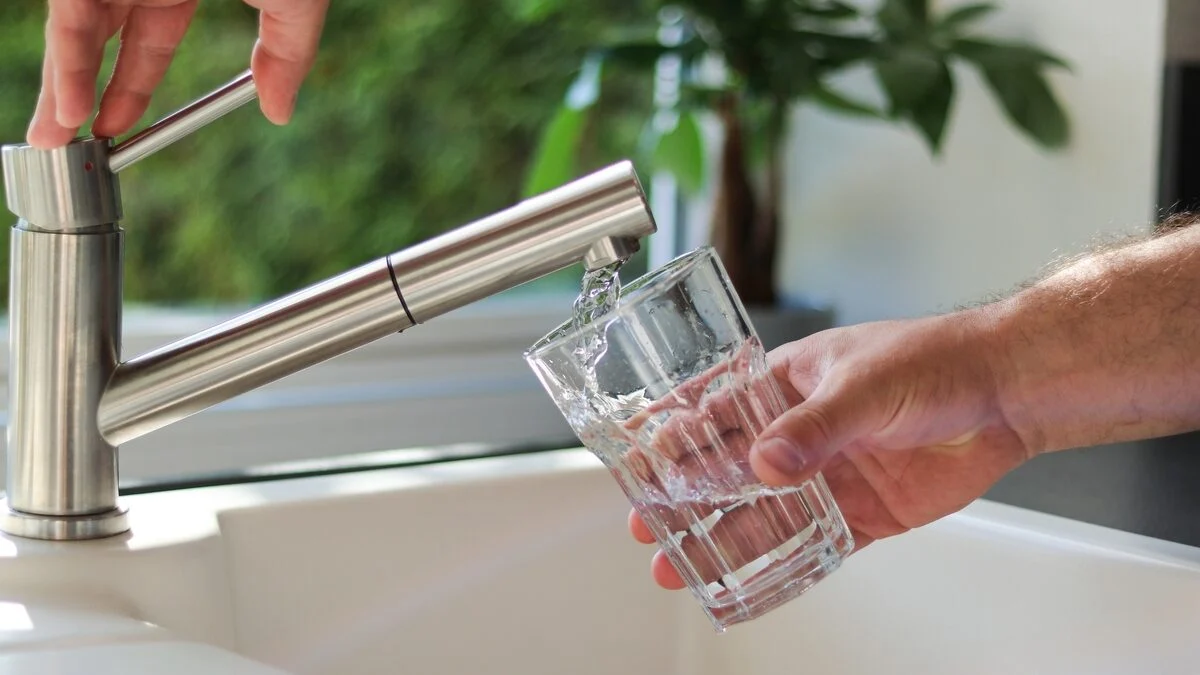
Has cold water become a luxury this summer? According to some Parisians, yes. In the capital, tap water could indeed reach around thirty degrees – and this, despite the position on cold tap water. An inconvenience that not only prevents you from cooling off: cold water can also become dangerous when it heats up…
Water that is close to 31 degrees in certain Parisian neighborhoods
If the regional health agency requires maintaining water “at a maximum of 25 degrees”, according to the words of Le Parisien. This threshold of 25°C constitutes a “quality reference”. Questioned by the daily newspaper, the ARS ensures that the water present in our pipes (at least at the bottom of the building) does not exceed 25°C. But in reality, this is not the case.
“When I open it, the water is super hot. I let it run for ten, twenty seconds, it maybe becomes lukewarm. It’s very annoying when you want to cool off“, testifies a city dweller in the columns of the magazine.
And this hot – even burning – water is not just an impression: by measuring the temperature of his water, this Parisian discovered that it reached… 31 degrees.
However, if the reasons for this too hot water are rather obvious (the fault of the particularly high temperatures this summer), a question arises: can this water put our health at risk? Dr Gérald Kierzek, medical director of True Medical, answers us honestly.
Does this warmer water really encourage the development of bacteria?
“Yes, a rise in temperature can encourage the growth of certain micro-organisms in water systems, especially when the water stagnates and the residual disinfectant (such as chlorine) gradually loses its effectiveness“, immediately affirms Dr. Gérald Kierzek.
Legionella, for example, mainly develops between 25 and 45°C.
“Cold water that reaches these temperatures in the pipes, combined with stagnation, therefore creates an environment more conducive to their proliferation,” warns the emergency doctor.
A risk confirmed by Sophie Jarraud, researcher at the CNRS interviewed by Le Parisien.
“Legionella is a bacteria naturally present in water. It proliferates from 25°C, multiplies particularly around 35°C and develops more easily in the presence of scale, amoebae and more generally, in stagnant water.“, she confides.
However, it is important to remember that the risk of Legionnaires’ disease is primarily linked to the inhalation of contaminated water aerosols, for example in the shower or with a misting system, and not to the consumption of water.
What temperature should you ultimately favor on a daily basis? (when you can choose)
To limit the bacterial risk, health authorities recommend keeping cold water at a temperature below 20°C, and, more broadly, preventing the water distributed from exceeding 25°C.
“Conversely, domestic hot water must be hot enough to prevent the proliferation of legionella: it must be maintained at more than 50 to 55°C in the network, while not exceeding 49–50°C at the tap to avoid burns,” explains the medical director of True Medical.
In practice, the ideal is therefore to have the freshest cold water possible and really hot hot water in the tanks, while avoiding stagnation zones where the water remains lukewarm for too long, i.e. between 25 and 45°C.
Finally, before drinking tap water or taking a shower after a period of non-use (such as summer vacation), it is better to let the water run for a few moments. This action allows the water that has stagnated in the pipes to be evacuated and reduces the risk of exposure to legionella.