
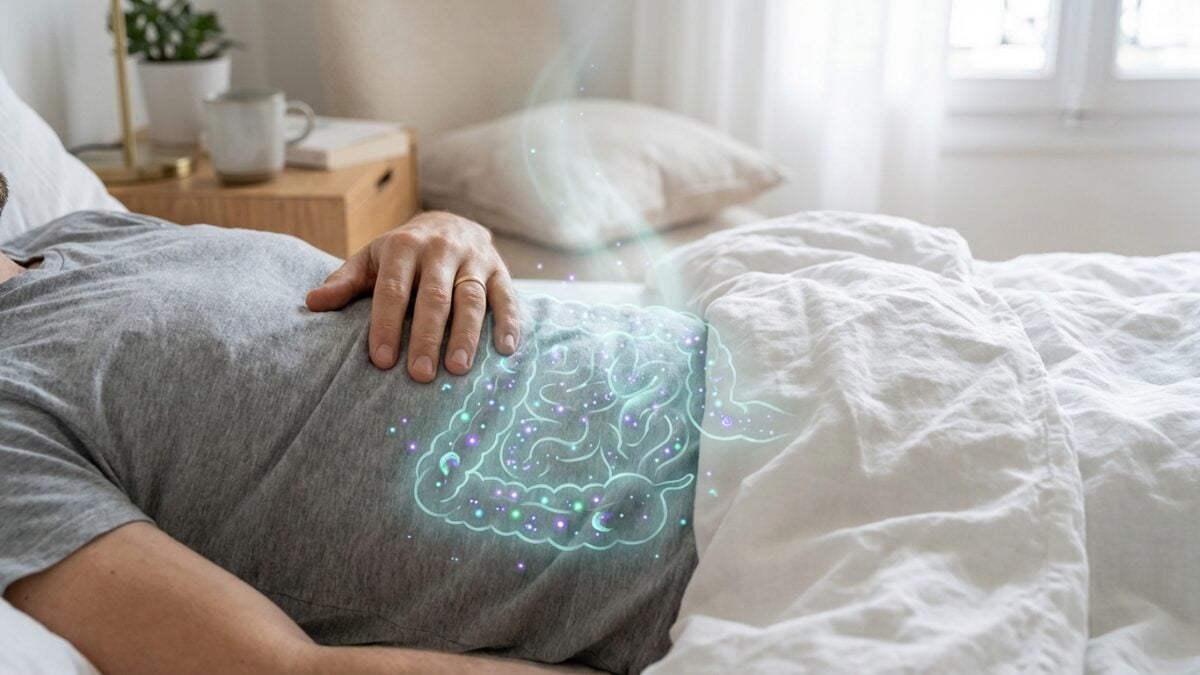
Counting sheep, turning off the screens, drinking herbal tea… Many bad sleepers have tried everything without finding restful nights. In France, 45% of people declare at least one
sleep disorderfrom insomnia to apnea, and frustration grows when traditional advice is no longer enough.
A much more discreet variable is now essential in the labs: the community of microbes which colonize our intestine. “the intestinal microbiota is increasingly recognized as a key player in neurological and psychiatric health”specified Professor Lin Lu of the Sixth Hospital of Peking University. It remains to be seen to what extent this
intestinal microbiota can shape our nights.
Intestinal microbiota and sleep: an ongoing dialogue
For more than a century, biologists have suspected a direct link between bacteria and sleep. Old experiments showed that cerebrospinal fluid taken from sleep-deprived animals, then injected into healthy animals, caused them to sink quickly. The compound responsible, called “Factor S”, turned out to be a muramyl peptide from bacterial walls. In mice, these fragments produced by the intestinal flora pass into the blood, cross the blood-brain barrier and trigger, in the brain, a cascade of cytokines which promote sleep.
Recent work confirms this soporific role of microbes. Mice raised without microbiota or treated with antibiotics have a profoundly disorganized sleep-wake cycle, whereas the restitution of flora or the provision of butyratea short-chain fatty acid made by certain bacteria, partly restores more stable sleep. In humans, people suffering fromchronic insomnia show less bacterial diversity and a sharp decline in butyrate producers like
Faecalibacterium Or Roseburia. At the same time, sleep deprivation or night work in turn modify the composition of the microbiota.
Insomnia, inflammation and bacteria out of balance
A Chinese study carried out among 96 adults compared microbiota and inflammation in subjects without disorder, with acute or chronic insomnia. In the latter, microbial diversity dropped significantly, with fewer anaerobic genera such as Faecalibacterium, Prevotella 9 Or
Roseburia and more Blautia Or
Eubacterium hallii. The researchers also observed higher levels of interleukin-1β, a pro-inflammatory cytokine, correlated with poverty in
Faecalibacterium and the severity of insomnia. The lack of butyrate and the rise in inflammation form a duo here closely linked to shortened nights.
These imbalances are not limited to insomnia. A recent review of clinical trials describes recurrent dysbiosis in sleep apnea and shift workers, with a decline in beneficial bacteria and evidence of increased inflammation. Sleep is the third pillar of well-being along with diet and physical activity. Understanding how microbes influence the quality of our nights could change our approach to mental health.
Probiotics, prebiotics: promising but still cautious avenues
Faced with these links, researchers are testing avenues of microbial modulation. Certain strains of
probiotics Lactobacillus Or
Bifidobacterium improved sleep quality and lowered cortisol in insomniacs. Prebiotic fibers, such as guar gum, have also improved sleep scores.
Synbiotic combinations combining bacteria and substrates, as well as fecal microbiota transplantation, have also improved insomnia in small studies in patients with chronic diseases. These trials remain limited in size and heterogeneous: the microbiota appears to be an important piece of the puzzle, not a magic wand to help you get back to sleep.