
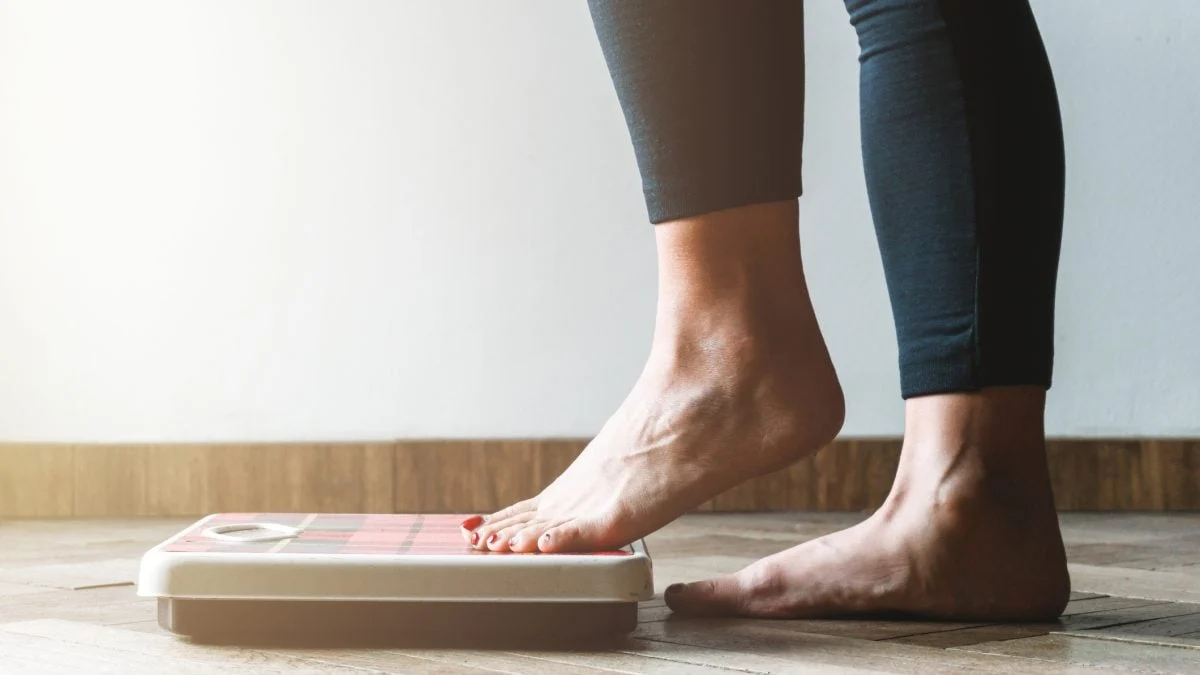
A few days before the start of the school year, many are getting back on the scale with a certain apprehension. And for good reason: between barbecues, ice creams and pancakes, the figure displayed may have increased somewhat. However, a rapid change in weight does not necessarily correspond to an increase in fat mass. In the short term, the number displayed by the scale also reflects the glycogen reserves, the water present in the body and the contents of the digestive tract.
During the holidays, diet changes…and so does our weight
During the summer, everyday habits are disrupted. Meals are eaten later, outside or on the go. We discover new foods, we cook differently, we eat more chips and biscuits… Until we see the needle on the scale start to panic.
“But this reality is very variable: some people lose weight during the holidays because they simply stop worrying. And this, even when they eat ice cream, grilled meats, and their diet is not necessarily balanced”recalls Pauline Pied, dietitian-nutritionist.
The change of pace and reduced stress can also change weight (in a good way).
However, weight gain – not caused by fat gain – can also occur. And it can be explained simply, according to the expert.
Water and glycogen can increase the number
In summer, it is not uncommon to see the number on the scale increase. But this increase does not necessarily correspond to an increase in fat mass.
“On vacation, we often eat a little differently, with more salt, sugar, etc. The body will then retain a little more water. This is not necessarily an increase in body fat, but simply a little more water retention”explains Pauline Pied.
Carbohydrates – stored as glycogen in muscles and the liver – can also cause weight loss. When glycogen stores increase, this can indeed lead to a temporary increase in weight. And conversely, when they decrease, the scale can show a few hundred grams less.
“During this key period, we will therefore more easily observe variations in weight on the scale. Sometimes, some of my patients panic a little. But these changes subside quickly”she says.
The transit can also affect the balance
Another key factor too often forgotten: transit. During the holidays, the consumption of vegetables and fiber tends to decrease, while the rhythm of meals and physical activity are disrupted.
“Sometimes, simply because of a lower consumption of vegetables, transit can be slowed down a little. And inevitably, this is also felt on the scale”confirms the specialist.
Back home, the most important thing is to gradually resume your habits, without trying to compensate for the excesses of the holidays.
“As soon as we resume our routine at home, whether in terms of diet, but also physical activity, simply by walking and moving as we usually do, the weight returns to normal within two weeks,” concludes the nutritionist.
A change in weight after returning from vacation therefore does not, in itself, allow us to conclude that there is a gain in body fat. Water, glycogen and transit can also temporarily move the needle on your scale!