
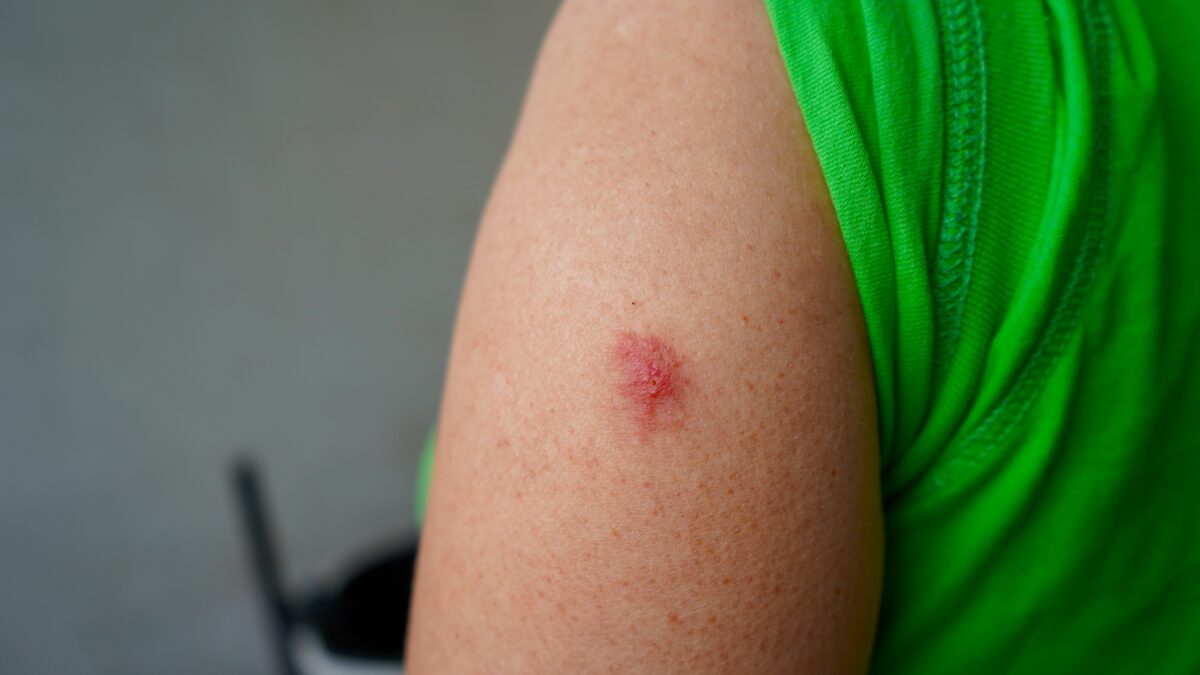
While most skin rashes are benign, some can signal a more serious health problem. It is therefore essential to know how to tell the difference. Here are Dr. Gérald Kierzek’s explanations to achieve this.
Decipher the nature of the marks in question
The first instinct should be to analyze the appearance of the brand. Dr. Kierzek warns us against confusing simple irritation with vascular fragility.
“Red or purplish marks, such as petechiae (the size of a pinhead) or purpura (larger plaques), are often a signal of subcutaneous microhemorrhages due to vascular fragility. he begins. These marks result from blood leaking out of the vessels.
“Their appearance may be due to mild trauma, a vitamin C or K deficiency, an allergy, a viral or bacterial infection, or even coagulation disorders, whether linked to thrombocytopenia – an abnormal decrease in the number of platelets – or to taking anticoagulants.
Conversely, simple skin irritations have other characteristics. These are caused by friction, a mild allergy, or the use of an unsuitable product. They tend to appear as itching or a burning sensation. They have a more diffuse appearance and generally disappear very quickly with local care.
Furthermore, the doctor reminds that a simple trauma or pressure can cause spontaneous bruising, particularly when the skin is thin.
What are the warning signs for real emergencies?
While self-medication is possible for mild irritations, it is strictly not recommended for the sudden appearance of petechiae or purpura. Dr. Kierzek emphasizes the importance of good vigilance and real responsiveness, emphasizing that you must consult immediately if the marks appear suddenly, spread quickly or persist for more than a few days.
He also recalls that the association of these marks with other systemic symptoms is a criterion of absolute urgency.
“An associated fever, for example, signals a possible serious infectious picture, such as meningitis, which requires immediate treatment. Likewise, the appearance of spontaneous bleeding (from the nose or gums) or unexplained fatigue, linked to skin marks, can indicate an underlying blood disorder which should never be neglected.”
Medical evaluation is also a priority in patients at risk, such as the elderly or those undergoing anticoagulant treatment, in whom the risk of worsening or bleeding is potentially increased.
Relieve and prevent, the right actions every day
If the marks are not urgent, Dr. Kierzek suggests simple and local actions to alleviate them. “Apply cold compresses, massage gently with vitamin K cream and avoid rubbing” he recommends.
For irritations, the objective is to quickly soothe the inflammation and repair the skin barrier.
“The first reflex is to apply a cold compress. Then, it is advisable to turn to soothing natural remedies, such as fresh aloe vera gel or oatmeal paste, known for their hydrating and calming properties.” adds the doctor.
“Cleansing the skin should be carried out with the greatest gentleness, using micellar or thermal water, before applying a restorative cream. These treatments should be formulated without perfume or alcohol and enriched with soothing active ingredients such as copper-zinc or colloidal oatmeal.”
To speed healing, Dr. Kierzek’s advice is clear: avoid scratching and exposure to the sun.