
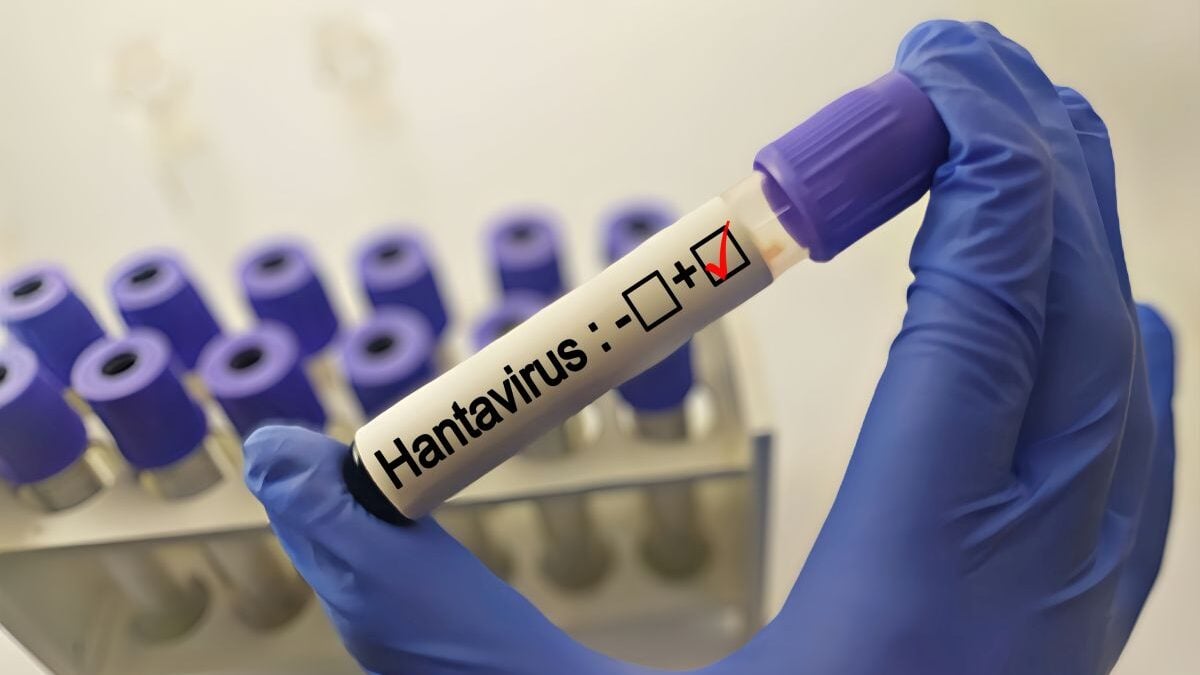
The alert was given after the identification of passengers from the cruise ship MV Hondius, affected by a particular strain of hantavirus. If these people were not on the boat, they traveled near sick people. Particularly by plane, on flights between Saint Helena, Johannesburg and Amsterdam.
According to information from BFMTV, the majority of these 22 contact cases are French and are subject to strict monitoring.
A decree published this Monday in the Official Journal also toughens the conditions of isolation. It allows you to stay in hospital for up to 42 days if necessary.
A strict surveillance protocol for identified cases
For the authorities, the objective is clear: break the chains of transmission before the virus takes hold in the territory.
A French passenger who presented with a slight fever on her return this Sunday is the subject of particular attention. His PCR test came back positive. Which makes her the first officially confirmed case in France.
Dr Gérald Kierzek explains the current strategy. “For contact cases, the authorities favor strict surveillance. France has implemented a 72-hour hospital quarantine then home isolation with monitoring for 42 days for returnees. Close contact with a suspected or confirmed case warrants temporary precautionary measures.”
What actions should you take in the event of “close contact”?
If you have been contacted by health authorities or if you believe you have been near an affected passenger, caution is still required. Unlike other respiratory viruses, the Andes strain requires significant proximity to spread.
“For the Andes strain, the human-to-human transmission described remains mainly linked to close and prolonged contact, not to easy “airborne” spread in the general population.reassures Dr. Kierzek. However, he advises three key measures. “Limit close contact, monitor the appearance of symptoms and consult quickly in the event of fever, muscle pain, fatigue or difficulty breathing.
Should we systematically isolate ourselves?
The question of isolation essentially depends on the level of exposure. The new legal framework allows prolonged monitoring for those whose risk is proven, in particular for families living under the same roof as a patient.
“For close contacts, isolation makes sense during the monitoring period, especially if health authorities have explicitly requested it“, explains the emergency doctor.
“On the other hand, casual contacts or people without significant exposure are not intended to automatically isolate themselves if they do not fall within the definition of risky contact.”
For relatives, he adds that the risk is concentrated on prolonged contact, which “warrants a health assessment and individualized instructions.”
What risk of spread for the French population?
Despite the strengthening of the legal arsenal and increased vigilance this week, experts want to be reassuring about the risk of a global epidemic. The mode of transmission of Hantavirus naturally limits its spread.
According to Dr. Gérald Kierzek, “The risk of dissemination in the general population is considered very low by available assessments, because the virus is not easily transmitted and chains of transmission appear short when control measures are applied.”
At this stage, international bodies such as the ECDC believe that a major pandemic is an unlikely scenario.
The situation around the MV Hondius Hantavirus outbreak requires a “week of very high vigilance” in France. Although the isolation measures may seem impressive, they respond to a precautionary principle to neutralize a strain whose human transmission, although rare, is possible.
“The Andes strain is worrying because it can be transmitted between humans under certain conditions, but transmission remains limited to close contacts, and health authorities are monitoring precisely to break possible chains of transmission.concludes Dr. Kierzek.
If no new cases are reported in the coming days, the risk will be considered greatly reduced.