
When the temperature rises, the dog’s body takes on much more than ours. He sweats very little and cools down mainly by panting. A dog’s normal temperature is between 38°C and 39°C, and the
heat stroke in dogs starts around 40°C. And your companion’s state of health can change very quickly, sometimes even before he collapses. Everything then relies on a few discrete signals.
Three early signs that easily pass for simple fatigue should alert you: abnormally frantic panting with gums that change color, hypersalivation with thick or stringy drool, and a suddenly absent gaze. Taken separately, each may seem benign. Together, they often announce incipient hyperthermia. Knowing them allows you to intervene before the critical phase
Heat stroke in dogs: 3 signs to watch for
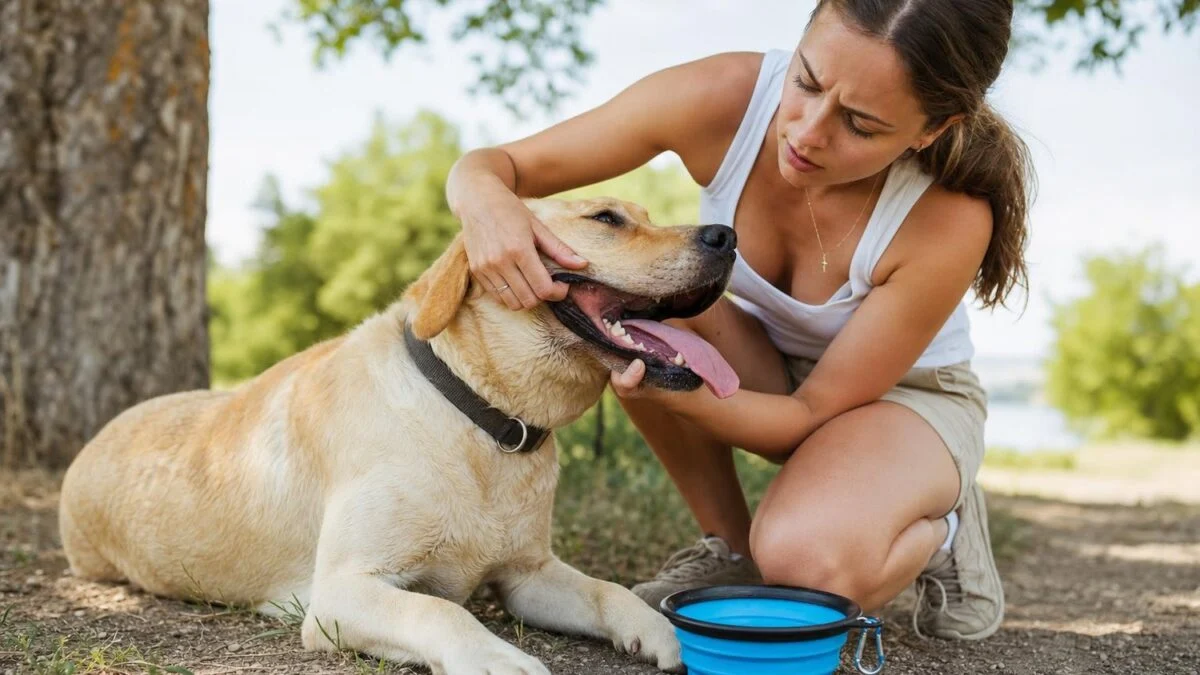
First signal, frantic panting. After normal effort, breathing slows down within a few minutes in the shade. At the start of heatstroke, the dog remains with its mouth wide open, breathing very quickly, as if panicked, even though it is resting. Veterinarians advise immediately raising the lips: uniform, moist pink gums are reassuring, while a brick red, purplish or, on the contrary, very pale and dry color already indicates circulatory suffering.
Second sign, saliva. When the body overheats, dehydration quickly changes its texture. We then observe drool which becomes abundant, thick, foamy or in sticky threads which hang from the mouth, even without food.
If, in addition, the dog has a vague gazeresponds late to his name or insistently seeks the shade, we can already suspect damage to the central nervous system linked to heat stroke in dogs.
Dog heatstroke: the express home test
In the heat, a quick check in thirty seconds can help you. See if the panting remains violent several minutes after being placed in the shade. Observe the color of the gums and the appearance of the drool. If at least two of these three elements are abnormal, veterinarians recommend suspecting hyperthermia and checking, if possible, the rectal temperature.
A dog is already in the red zone from 40°C, while its norm is around 38°C to 39°C.
Heat stroke: emergency actions to take immediately
If you suspect heatstroke in your dog, quickly move him to the shade, in a ventilated area, and lightly wet his stomach, thighs and pads with cool, but not icy, water. Then immediately call your emergency veterinarian.