
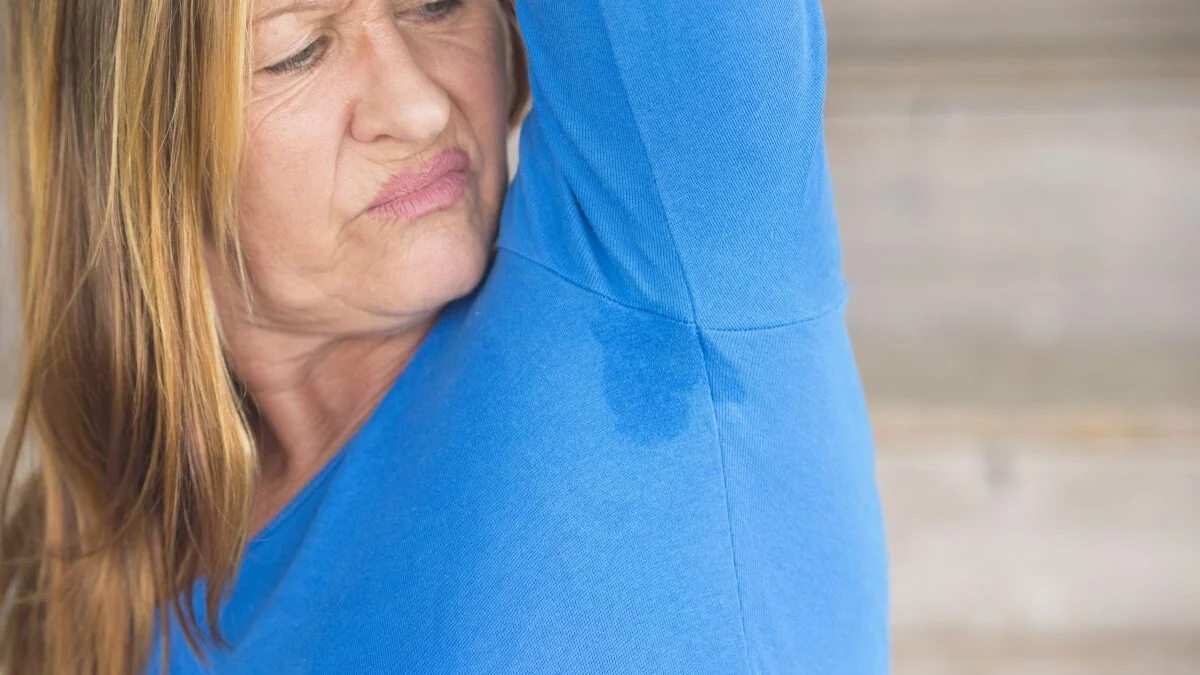
If sweating is a natural and essential physiological mechanism for regulating our body temperature, the odors that accompany it can quickly become a daily burden.
Fortunately, by understanding the mechanism of sweating, it is possible to adopt the right actions to limit the inconvenience.
Why does sweat smell stronger in summer?
Contrary to popular belief, sweat itself is not particularly odorous. Dr Gérald Kierzek, emergency doctor and medical director of True Medical, sheds light on the real culprit.
“Heat stimulates the sweat glands, so we sweat more to cool the body, and bacteria in the skin then transform this sweat into odors. The odor can also be more pronounced if the sweat stagnates in the clothes, if we wear synthetic materials, or if we sweat a lot from the feet and armpits.”
In summary, sweat itself smells little because it is mainly the bacteria present on the surface of our epidermis which degrade it and produce odorous compounds. The rise in the thermometer and physical effort are not the only ones involved. Indeed, factors such as stress, wearing clothing that is too tight as well as poor ventilation of naturally humid areas, such as the armpits, feet and skin folds, significantly accentuate this phenomenon.
How to limit sweat production on a daily basis?
It is important to remember that we cannot always prevent sweating, because it is a normal thermoregulation mechanism of the body. However, to produce less, we must mainly focus on reducing the triggers.
“To have a more peaceful summer, try to stay cool as much as possible during the hottest parts of the day and drink water regularly to help your body regulate itself without excessive effort. It is equally essential to limit sources of stress, which instantly stimulate the sweat glands, and to favor loose, breathable materials such as cotton or linen, while avoiding synthetic textiles which act like real steamers. advises our expert.
The right actions to neutralize bad odors
While sweat is unavoidable, the odor can be largely controlled with careful hygiene habits. You should first shower regularly, particularly after a sports session or exposure to high heat.
“Then take the time to dry your skin thoroughly, especially in the armpits, folds and feet, because residual moisture encourages the proliferation of bacteria. Furthermore, do not hesitate to change clothes as soon as perspiration becomes too abundant and choose loose, breathable textiles.“.
Finally, if there is a strong, persistent odor, consider washing clothes worn next to the skin more frequently.
Deodorant or antiperspirant: what to choose and when to consult?
The choice of your hygiene product depends above all on your main needs.
“The deodorant mainly masks the odor, while the antiperspirant acts more on the amount of sweat by tightening the pores. For optimal effectiveness of the antiperspirant, application should ideally be made to clean and perfectly dry skin in the evening, in order to allow the product to act overnight. The deodorant can, for its part, be applied in the morning according to your usage habits. explains Dr. Kierzek again.
However, be careful if you have sensitive skin, and avoid applying these products just after shaving or on an irritated area.
When should you seek medical advice?
You should seek medical advice if sweating:
- Becomes excessive;
- Interferes with daily life;
- Appears on one side only;
- Accompanied by palpitations, weight loss, fever or significant night sweats;
- Sudden change of smell without explanation;
- Reveals very heavy sweating which can sometimes be hyperhidrosis, a hormonal problem, infectious or linked to a treatment, because it is not always “just the heat”.
In summary, sweating in summer is essential to our health, but suffering from bad odors is not inevitable. By adopting natural textiles, rigorous hygiene and choosing the right product, you will find optimal comfort. “If despite this advice the discomfort persists or is accompanied by other symptoms, do not hesitate to speak to your doctor.” concludes Dr. Kierzek.