
See a
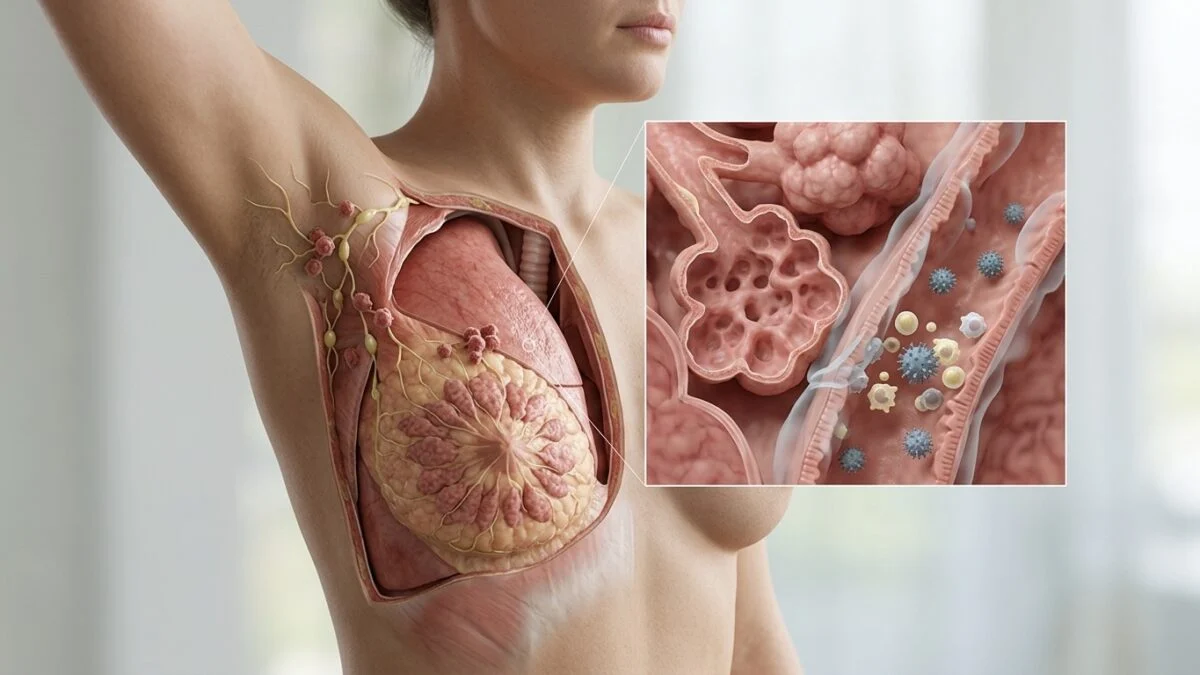
breast cancer spreading to the lungs is one of the most feared turning points of the disease, because lung metastases make treatments more cumbersome. However, a British team has shown that a respiratory infection of the type that causes a simple cold could temporarily complicate the establishment of new tumors in the lung. This paradox is based on a defense reaction that our body already triggers against many viruses.
In a preclinical study published in the journal PNASresearchers from Imperial College London and the Francis Crick Institute infected mice with the respiratory syncytial virus (RSV)responsible for symptoms of
common cold in almost all children. Twenty-four hours later, they injected breast cancer cells into the bloodstream. One month later, infected mice had approximately 65 to 70% fewer lung tumor nodules than uninfected mice, with no difference in tumor size.
How a cold virus disrupts the route to breast cancer metastasis
In the lungs, the infection did not slow the growth of metastases already present; According to Ana Farias of the National Heart and Lung Institute at Imperial College London, the infected mice especially developed fewer new tumors than the control group, which shows that the implantation stage is disrupted. Cancer cells have more difficulty leaving the blood circulation to colonize lung tissue.
To understand the origin of this brake, the team temporarily removed different types of white blood cells in the mice, without seeing the protection disappear. The key signal therefore seemed to come from the lung tissues: during infection, they massively produce type I interferonsantiviral proteins which, administered alone nasally to healthy mice, reproduced the same reduction in the number of lung metastases.
Interferons, galectin-9 and the lung environment: a very short protective window
The lungs live in constant contact with the outside air, which forces their immune system to usually remain very calm. According to the article from PNASthe thrust oftype I interferons triggered by RSV modifies the epithelial and endothelial cells that line the alveoli, making the wall less welcoming to tumor cells. This reaction also increases the production of a protein,
galectin-9capable of directly reducing the ability of cancer cells to cling.
Catching a cold doesn’t cure breast cancer, but opens a path to medications
This study suggests that certain viral infections influence how the immune system interacts with cancer cells. RSV, in particular, appears to prime the immune system to limit the spread of cancer cells from the breast to the lungs in mice. Tanya Hollands, head of research information at Cancer Research UK, remains measured:
“This is preliminary research, and previous studies have reported different effects; so further work is needed to understand what this might mean for people. But discovering how the immune system influences cancer’s ability to grow and spread could potentially help us find new ways to fight it.”.
The researchers from Imperial College London, however, emphasize that there is absolutely no question of voluntarily allowing yourself to be infected in the hope of protecting your lungs, especially as these results have only been observed in mice.
For Cecilia Johansson, from the National Heart and Lung Institute at Imperial College London, “If we can find a way to make the lungs more ‘resistant’ to successful implantation of metastatic cancer cells, that’s encouraging. Moving forward, we hope that a drug can be developed to mimic the effect we observed.“, she explains. Such a treatment would aim to create, at the right time, a short window during which metastases have much more difficulty forming in the lungs, in addition to therapies already used against breast cancer.